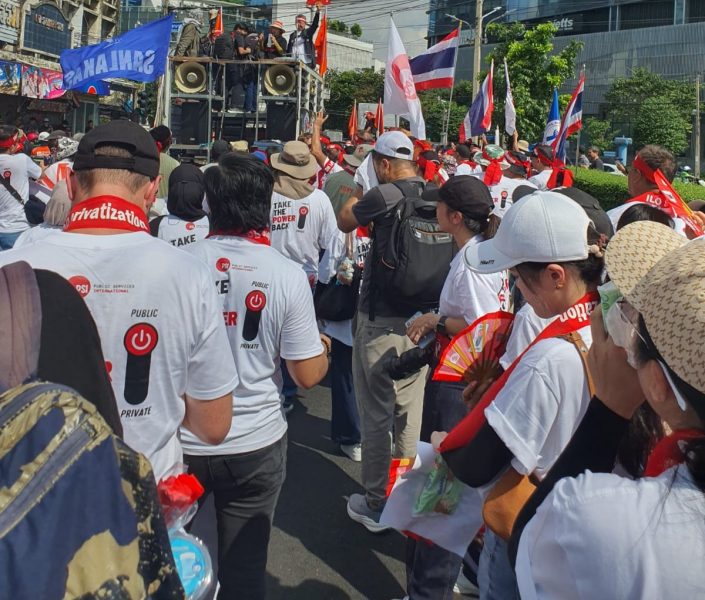
GCAP Statement on 17 October 2026 – International Day for the Eradication of Poverty Friday October 16th, 2026
The world is going through extremely difficult times. The worsening geopolitical situation marked by continued wars and conflicts, rising inequality, catastrophic impacts of climate change, rampant human rights violations, shrinking civic space and the erosion of multilateralism are deepening the cost of living crisis and pushing millions into hunger and deprivation.
On 17 October 2026, the International Day for the Eradication of Poverty, we are confronted with the persistence of poverty on a staggering scale. Around 700 million people live in extreme poverty, according to the World Bank, while 1,1 billion people experience multidimensial poverty, according to the UN. In total, approximately 3.5 billion people – nearly half of the global population – live in poverty and are disproportionately affected by rising of food and energy prices, which further erode their purchasing power and undermine their ability to meet basic needs.
Statement on 17 October 2026 in English, Spanish and French.
World Bank and IMF, currently holding their Annual Meetings in Bangkok, continue to impose austerity policies that deepen people’s suffering by driving cuts to health, education and social protection, when they are needed most. Countries are forced to prioritise debt servicing, including payments of illegitimate debts. These policies are violating the human rights of billions of people.
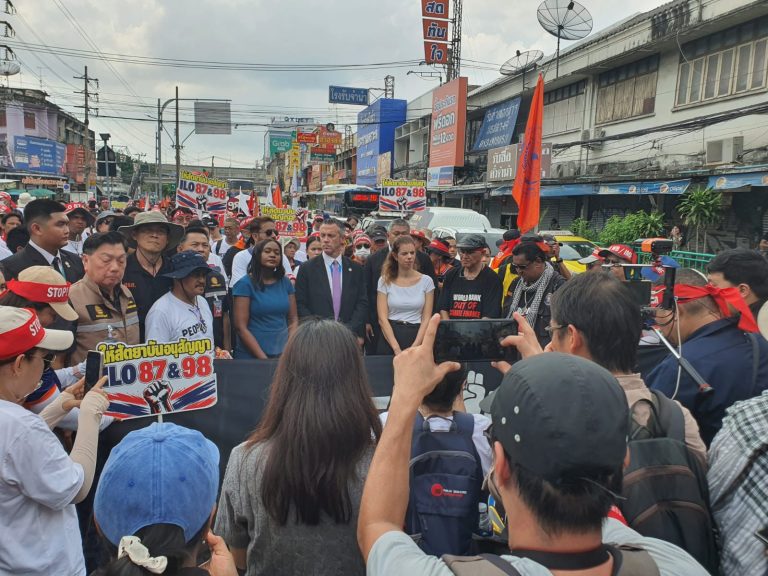
Representatives of Thai trade unions, together with people’s movements and civil society hand over the demands of the International People’s Assembly to World Bank and IMF representatives during the demonstration on 16 October 2026 in Bangkok.
In the meantime, we are witnessing a sharp rise of billionaires. Oxfam’s 2026 Inequality study, Resisting the rule of the rich, suggests that the number of billionaires has surpassed 3000 for the first time. Elon Musk, the richest person in the world, had reportedly become the first person to amass wealth over a trillion USD.
Billionaires and large corporations hold enormous influence over politics and the economy. Wealth can shape policy through political donations, lobbying and close ties with those in power. Many also control major media platforms, social media networks and technologies that shape daily lives. Meanwhile, the rapid advancement of AI is raising serious concerns about its potential threat to humanity, starting by erasing millions of jobs.
At the same time, widening inequality is being driven by policy choices that concentrate control over land, water, forests and minerals in fewer private hands. When people resist displacement, loss of livelihoods, harmful economic policies or restrictions on free speech, they face repression. Human rights violations are being reported in many parts of the world.
The implementation of the Sustainable Development Goals (SDGs), remains severely off track. Barely 19% of the targets will be achieved. This situation has emerged due to lack of accountability of the governments towards their global commitments and due to persistent injustices and inequalities.
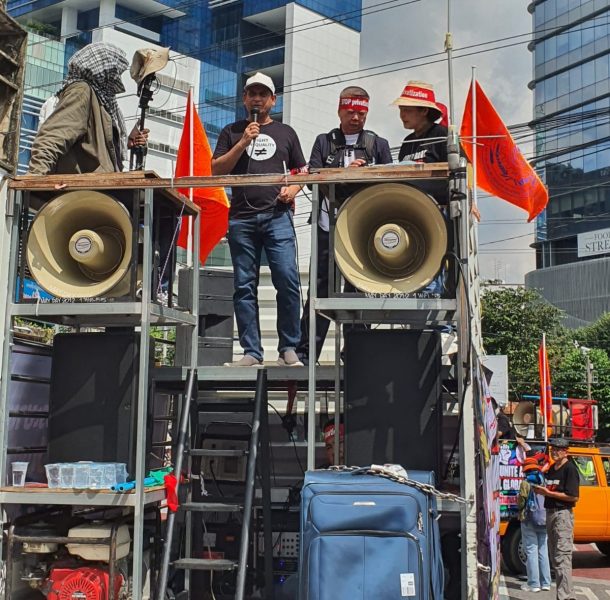
GCAP Asia Coordinator Pradeep Baisakh talked on the demands from People’s Assemblies in Asia: Publicly funded universal social protection floors and public services – no privatisation; World Bank and IMF should get out of the debt management; we need a United Nations Framework Convention on Sovereign Debt; climate finance should be grants, not loans.
Right-wing political groups often use social media to spread divisive narratives and hostility, creating social tensions.
The nexus between political leaders, the super-rich, bureaucracy and sections of the media has grown stronger, while ordinary people are left with little voice or influence. Thus, the world has witnessed a “trickle up of wealth and power” leaving common people increasingly disempowered. This is particularly true for the people on the margins — indigenous communities, Dalits, people with disabilities, women and other disadvantaged groups.
Climate Change is affecting millions of people, particularly in low-income countries, but its impacts are being felt across the world. The world has already witnessed the breach of 1.5 degree centigrade level above the pre-industrial level in some cases. Its impacts include sea-level rise, threats to agriculture and livelihoods, adverse health effects and increasingly frequent and severe disasters. The disaster in Nepal, which claimed thousands of lives and destroyed entire regions, is the latestin a series of climate-related catastrophes.
Wars affect people both directly and indirectly. Innocent people, including children are killed and wounded by bombs and missiles, infrastructure is destroyed, families are displaced, and livelihoods of millions are shattered. Many become refugees and seek asylum in other countries and live in refugee camps under precarious conditions, often without access to basic services, security or dignified living conditions.
Civic space is suppressed by governments. Democracies are replaced by autocratic rules. Over 72% of the world population live in the countries where civic freedom is either suppressed or closed. Various legislations are brought by the governments to muzzle dissent; laws are passed to throttle funding to civil society organisations (CSOs). Instances of human rights violations, mainly of the most marginalised groups, are reported across the world.
On 17 October 2026, GCAP calls for policies against the cost of living crisis, to end austerity, to finance universal social protection, health coverage, education and other public services; debt and tax justice and the transformation of the international financial architecture. We call for an end to wars and for protection of human rights of people fighting for their rights!